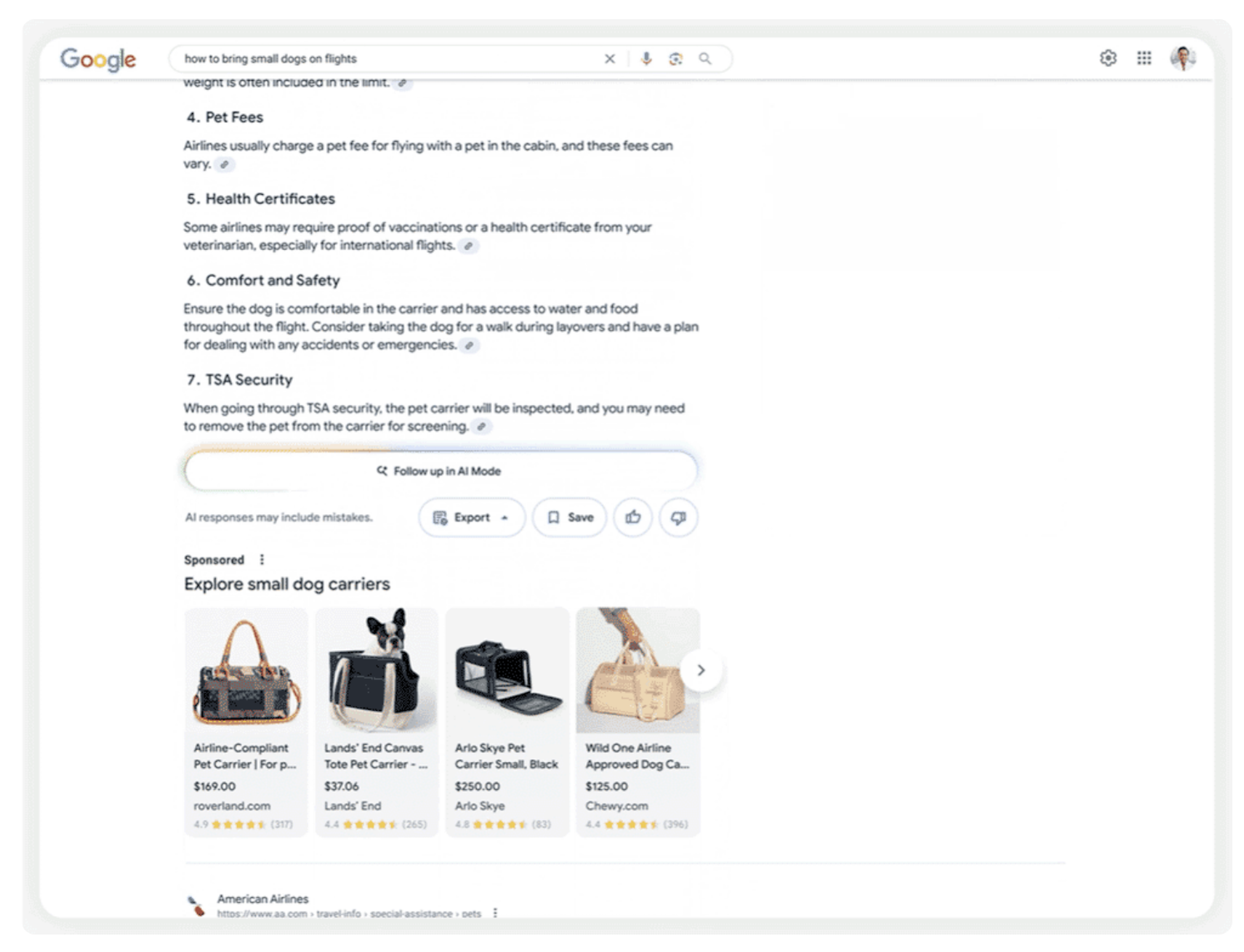
After putting it to the test for limited users, Google finally introduced the “AI Mode” in search for all in the US. It runs alongside the traditional search results with blue links, while also challenging their 25-year-old reign.
What’s happening?
At the I/O, Google announced the launch of “AI Mode” in Search. Presently available in the US, and accessible in a separate tab, the newly-added feature reaffirms Google’s standing on AI and is expected to change how we have traditionally interacted with search.
In AI mode, users find 100% AI answers – similar to those of AI Overviews; albeit with some striking or subtle differences, such as in interface, citations, tone, and focus. Your search query returns a detailed AI-generated answer with, if possible, bullet points, images, structured instructions, and citations. Your search may also trigger suggested follow-up questions, with answers similar to or richer than early results in tone and format.
The traditional search will remain alongside AI mode, and users may choose which interface to follow: whether the traditional search with blue links, now spearheaded by AI Overviews, or an entirely AI-powered search.
While experts have conflicting opinions about the efficacy of this feature – with many fearing that it could drastically reduce the value of organic search results and further diminish already dwindling traffic – others opine that it could allow websites to be discovered in two ways at once.
If your content is strong, you can appear in AI-generated answers and in the regular SERPs.
Analysis and speculation on how publishers & SEOs should adapt:
Ever since AI Overviews were introduced, website owners focusing on TOFU content have reported significant or noticeable drops in their organic traffic count. With Google now appearing to be adamant about AI, content and SEO strategists should start to (if they haven’t already) rethink their approach.
First of all, it’s crucial to publish content that offers depth, originality, and unique insights. The key is to understand and integrate elements that AI summaries generally struggle to replicate. Mid- and bottom-funnel content (in-depth guides, case studies, product comparisons, and UGC) should become more commonplace. These formats have been around for quite some time, but their importance has never been more relevant.
Then, developing a known brand authority and trust through thought leadership content can also help your content get the attention it deserves.
Thirdly, diversification stands unchallenged today. Think of newsletters, gated content resources, relationship building, and community engagement. This is to reduce dependency on Google alone.
Additionally, pay sufficient attention to structured data and schema markup, as they can increase AI mentions.
As far as measurement is concerned, metrics such as time on page and scroll depth will become very important to determine your overall content value.
The good old SEO tactics are not fully gone yet because the blue links are still here, but they reside in a separate interface and are challenged by AI. So, it’s time to be ready to optimize for AI experiences because who knows, a fully AI-powered search landscape may be only a few years away.
Also, since the landscape is favoring an AI future, it is important to adapt and evolve. Using AI tools wherever possible remains key – however, of course, with sufficient and legible human oversight.
Image Source: Google

Team FTAI
FTAI blogs, news, reviews, and other types of content are written by individuals with a verified writing background of at least five years. Every piece undergoes multiple rounds of revision before it is publicly accessible online.
Leave a Reply