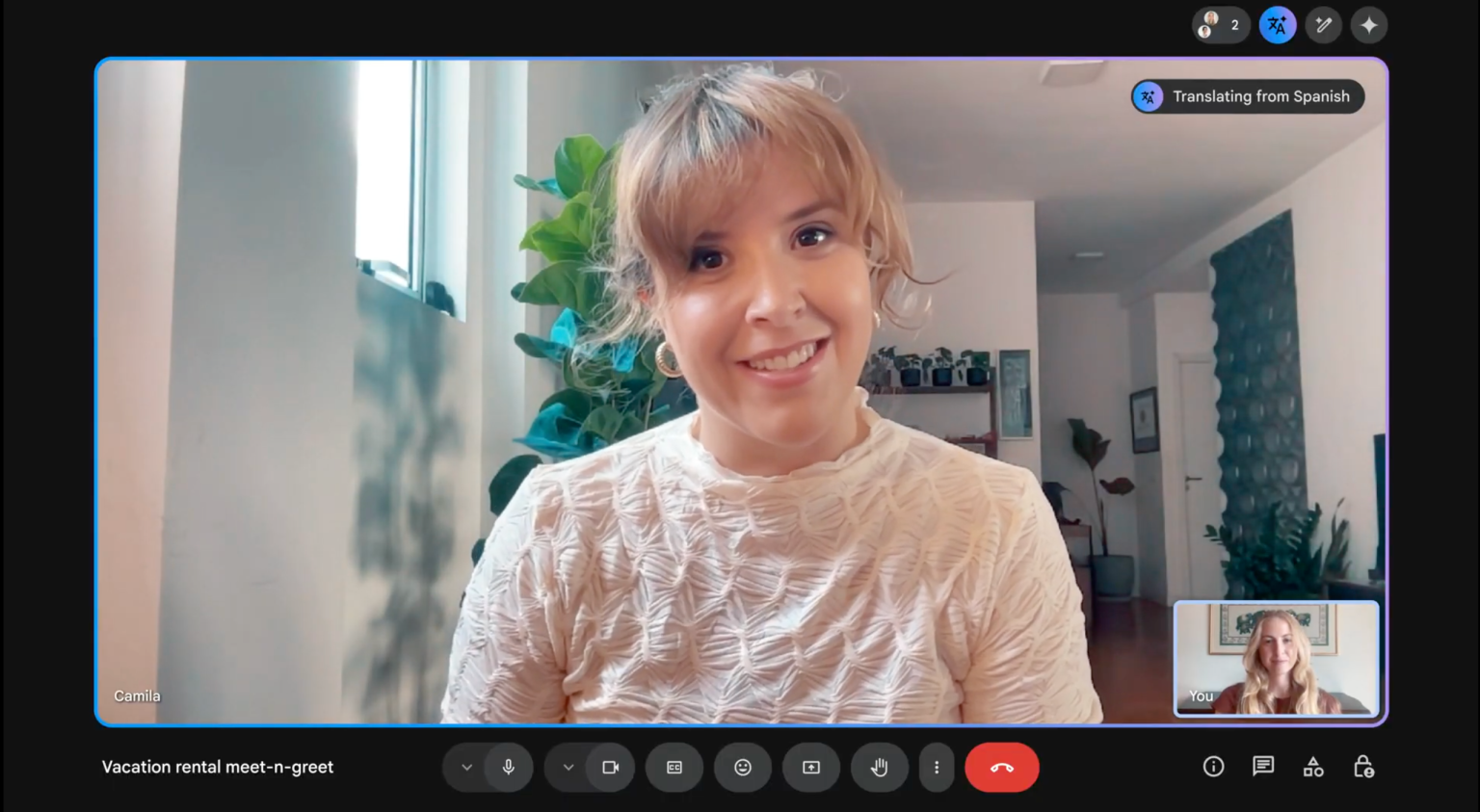
Google Meet video meetings now have a live and low-latency speech translation feature. Presently in beta, subscribers with Google AI Pro plans can use it in Spanish and English, with support for other languages coming soon!
What’s happening?
In a big Workspace reveal at its annual I/O event yesterday, Google announced that it is rolling out real-time speech translation in Google Meet. The new feature works in near real-time with low latency while preserving the speaker’s voice, tone, and expressions in the translated language.
During a video call, attendees will still hear a faint version of the original speaker’s speech and the translated voiceover will follow, creating an immersive interaction for everyone involved. Interestingly, only one active attendee needs to be subscribed to the paid plan for the feature to work for all.
Analysis (Benefits, Use cases & Some Downsides)
You have used Google text translations, but with AI speech translation, communication is going to be a lot simpler, more accessible, and easier to understand.
It will allow speakers to communicate flawlessly in their own native language, and listeners get the message in their own.
The move will remove communication barriers in international video meetings, and attendees participating from different countries with different cultural and linguistic backgrounds can join in natural conversations without needing an interpreter.
The latency of this feature is said to be very low, which means multiple attendees can talk and work in real-time.
As far as its use cases are concerned, we can imagine plenty of them. For example, global sales representatives can communicate with their international clients in their own native languages.
Teachers can teach multilingual students in real time. Doctors and patients who speak different languages can communicate clearly during remote consultations without needing an interpreter.
In international crisis management, where delay is dangerous, teams can communicate quickly. YouTubers can interview guests from any country and broadcast with live translated audio. And older family members who don’t speak the same language as their younger generations can now have more connected conversations.
This important development indicates how technology is reshaping the nature of communication. While fewer or perhaps no moments will be lost in translation, it may have some downsides too.
It could reduce the need for interpreters, who may have seen opportunities in remote meetings.
The perception that English is the standard language of choice for professional communication may be further blurred and the need to learn new languages may not seem necessary in the first place.
Google’s AI speech translation can only translate between English and Spanish presently, while plan are in place to accommodate other languages in the coming weeks.
Image Source: Google

Team FTAI
FTAI blogs, news, reviews, and other types of content are written by individuals with a verified writing background of at least five years. Every piece undergoes multiple rounds of revision before it is publicly accessible online.
Leave a Reply